
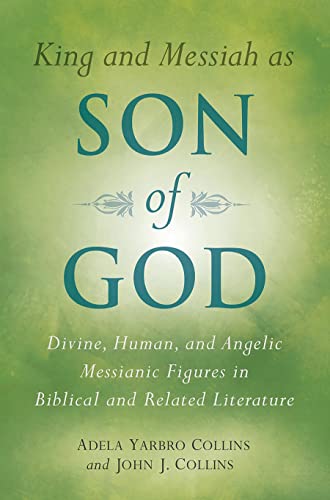
King and Messiah as Son of God Divine, human, and angelic Messianic figures in Biblical and related literature Adela Yarbro Collins, John J. Collins
Material type: TextLanguage: English Publication details: U.S.A.; William B. Eerdmans Pub. Co.; 2008Description: 261tr; Paperback; 23 cmISBN:
 - 9780802807724
- 232.1
- A228-C71
| Cover image | Item type | Current library | Home library | Collection | Shelving location | Call number | Materials specified | Vol info | URL | Copy number | Status | Notes | Date due | Barcode | Item holds | Item hold queue priority | Course reserves | |
|---|---|---|---|---|---|---|---|---|---|---|---|---|---|---|---|---|---|---|
 Sách
Sách
|
Thư Viện Cơ Đốc | Available | TVCD-10943 |
This book traces the history of the idea that the king and later the messiah is Son of God, from its origins in ancient Near Eastern royal ideology to its Christian appropriation in the New Testament. Both highly regarded scholars, Adela Yarbro Collins and John J. Collins argue that Jesus was called ""the Son of God"" precisely because he was believed to be the messianic king. This belief and tradition, they contend, led to the identification of Jesus as preexistent, personified Wisdom, or a heavenly being in the New Testament canon. However, the titles Jesus is given are historical titles tracing back to Egyptian New Kingdom ideology. Therefore the title ""Son of God"" is likely solely messianic and not literal. King and Messiah as Son of God is distinctive in its range, spanning both Testaments and informed by ancient Near Eastern literature and Jewish noncanonical literature.
There are no comments on this title.