
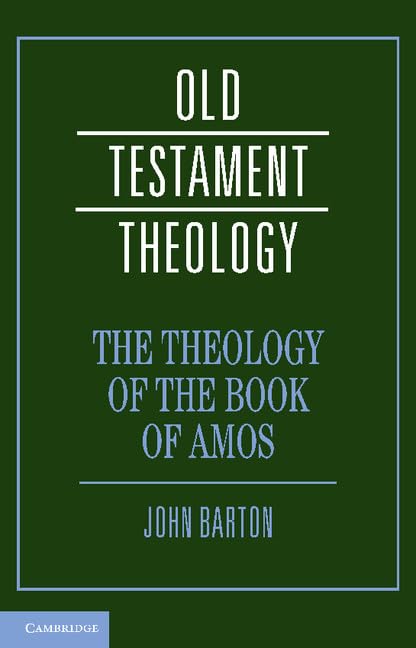
The Theology of the Book of Amos Old Testament Theology Brent A. Strawn
Material type: TextLanguage: English Series: Old Testament TheologyPublication details: U.S.A; Cambridge University Press; 2012Description: 216tr; paperback; 22 cmISBN:
 - 9780521671750
- 224.806
- B293-J65
| Cover image | Item type | Current library | Home library | Collection | Shelving location | Call number | Materials specified | Vol info | URL | Copy number | Status | Notes | Date due | Barcode | Item holds | Item hold queue priority | Course reserves | |
|---|---|---|---|---|---|---|---|---|---|---|---|---|---|---|---|---|---|---|
 Sách
Sách
|
Thư Viện Cơ Đốc | Available | TVCD-14567 |
In modern times Amos has come to be considered one of the most important prophets, mainly for his uncompromising message about social justice. This book provides a detailed exploration of this theme and other important elements of the theology underlying the book of Amos. It also includes chapters on the text itself, providing a critical assessment of how the book came to be, the original message of Amos and his circle, which parts of the book may have been added by later scribes, and the finished form of the book. The author also considers the book's reception in ancient and modern times by interpreters as varied as rabbis, the Church Fathers, the Reformers, and liberation theologians. Throughout, the focus is on how to read the book of Amos holistically to understand the organic development of the prophet's message through the many stages of the book's development and interpretation.
There are no comments on this title.