
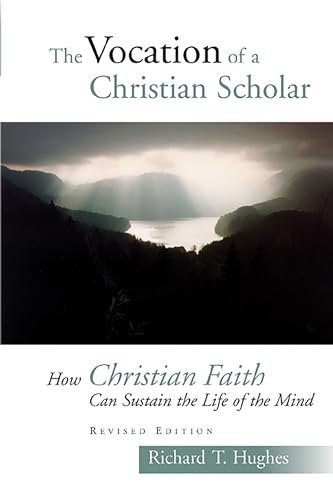
How Christian Faith Can Sustain the Life of the Mind The Vocation of a Christian Scholar Richard T. Hughes
Material type: TextLanguage: English Publication details: U.S.A; William B. Eerdmans Publishing Company; 2005Description: 145tr; Paperback, Illustration; 23 cmISBN:
 - 0802829155
- 248.88
- H893-R51
| Cover image | Item type | Current library | Home library | Collection | Shelving location | Call number | Materials specified | Vol info | URL | Copy number | Status | Notes | Date due | Barcode | Item holds | Item hold queue priority | Course reserves | |
|---|---|---|---|---|---|---|---|---|---|---|---|---|---|---|---|---|---|---|
 Sách
Sách
|
Thư Viện Cơ Đốc | Available | TVCD-14891 |
Richard Thomas Hughes's book on the relationship between Christian faith and secular learning which speak more directly to the subject of vocation. In a substantial new preface Hughes recounts his own vocational journey, telling how he drew on Christian theology to discover his talents and how best to use them. Another new chapter explores the vocation of Christian colleges and universities, including the purposes and goals of church-related education. Drawing from the Catholic, Reformed, Lutheran, and Anabaptist traditions, Hughes shows how the Christian scholar can embrace paradox rather than dogmatism. His reflections provide a compelling argument that faith, properly pursued, nourishes the openness and curiosity that make a life of the mind possible.
There are no comments on this title.