
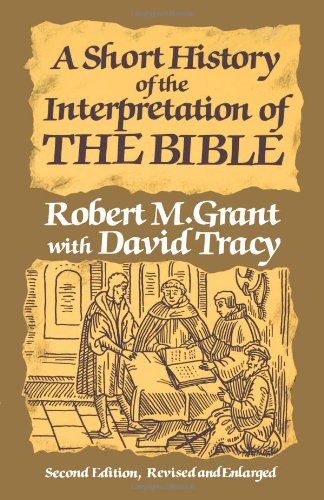
A short history of the interpretation of the Bible Robert M. Grant with David Tracy
Material type: TextLanguage: 1 eng Publication details: Philadelphia; Portress; 1985Edition: 2nd edDescription: 213tr; Paperback; 22cmISBN:
 - 0800617622
- 220.609
- R639-G76
| Cover image | Item type | Current library | Home library | Collection | Shelving location | Call number | Materials specified | Vol info | URL | Copy number | Status | Notes | Date due | Barcode | Item holds | Item hold queue priority | Course reserves | |
|---|---|---|---|---|---|---|---|---|---|---|---|---|---|---|---|---|---|---|
 Sách
Sách
|
Thư Viện Cơ Đốc | Available | TVCD-5765 |
The interpretation of scripture provides a link between contemporary theology and the documents of the church's earliest traditions. This well-known work, once again made available, examines the principal methods which Christians have used to interpret the Bible. Beginning with the interpretation of the , Old Testament by Jesus, the evangelists and Paul, it focusses primarily on those times when significant new developments were taking place. Robert M. Grant pays special attention to early Christian history, then analyses the schools of Alexandria and Antioch, the mediaeval period, the Reformation, the Enlightenment and the Nineteenth Century. David Tracy's contribution shows the relation of earlier ideas to modern Roman Catholic approaches.
There are no comments on this title.