
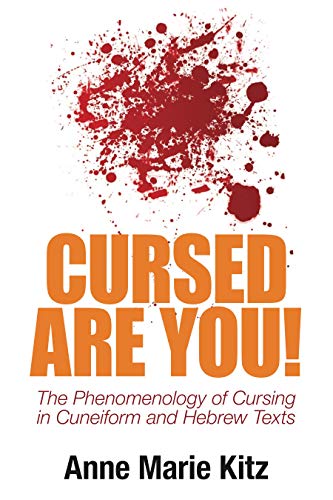
Cursed Are You! The phenomenology of cursing in cuneiform and Hebrew texts Anne Marie Kitz
Material type: TextLanguage: 0 eng Publication details: U.S.A; Eisenbrauns; 2014Description: 528tr; Hardcover; 23cmISBN:
 - 9781575062716
- 133.44
- A613-K62
| Cover image | Item type | Current library | Home library | Collection | Shelving location | Call number | Materials specified | Vol info | URL | Copy number | Status | Notes | Date due | Barcode | Item holds | Item hold queue priority | Course reserves | |
|---|---|---|---|---|---|---|---|---|---|---|---|---|---|---|---|---|---|---|
 Sách
Sách
|
Thư Viện Cơ Đốc | Available | TVCD-8460 |
This is a book about curses. It is not about curses as insults or offensive language but curses as petitions to the divine world to render judgment and execute harm on identified, hostile forces. In the ancient world, curses functioned in a way markedly different from our own, and it is into the world of the ancient Near East that we must go to appreciate the scope of their influence. For the ancient Near Easterners, curses had authentic meaning. Curses were part of their life and religion. They were not inherently magic or features of superstitions, nor were they mere curiosities or trifling antidotes. They were real and effective. They were employed proactively and reactively to manage life's many vicissitudes and maintain social harmony. They were principally protective, but they were also the cause of misfortune, illness, depression, and anything else that undermined a comfortable, well-balanced life. Every member of society used them, from slave to king, from young to old, from men and women to the deities themselves. They crossed cultural lines and required little or no explanation, for curses were the source of great evil. In other words, curses were universal. Because curses were woven into the very fabric of every known ancient Near Eastern society, they emerge frequently and in a wide variety of venues. They appear on public and private display objects, on tomb stelae, tomb lintels, sarcophagi, and ancient susurrus and narûs. They are used in political, administrative, social, religious, and familial contexts. They are the subject of incantations. They are tools that exorcise demons and dispel disease
There are no comments on this title.