
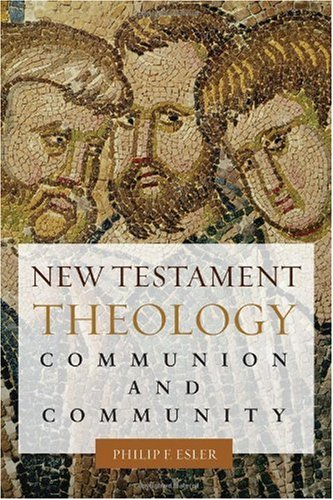
New Testament theology - Communion and community Philip F. Esler
Material type: TextLanguage: 0 eng Publication details: U.S.A; Fortress; 2005Description: 353tr; paperback; 24cmISBN:
 - 0800637194
- 230.0415
- P549-E76
| Cover image | Item type | Current library | Home library | Collection | Shelving location | Call number | Materials specified | Vol info | URL | Copy number | Status | Notes | Date due | Barcode | Item holds | Item hold queue priority | Course reserves | |
|---|---|---|---|---|---|---|---|---|---|---|---|---|---|---|---|---|---|---|
 Sách
Sách
|
Thư Viện Cơ Đốc | Available | TVCD-6041 |
Esler's innovative proposal features a cutting-edge combination of theology, exegesis, and social analysis. He argues for new thinking about New Testament theology in light of the early social history of Christian communities. His detailed analysis of Paul's letters to the Romans and 1 Corinthians validates his thesis and clarifies its significance for scholarship. Using both the tradition of `the communion of the saints` and social-scientific methods, Esler brings the discipline of New Testament theology back to its theological core. He argues that interpreters also need to take into account both the history of interpretation and the multitude of voices within the contemporary church.
There are no comments on this title.